The First Cut Sets the Standard for Everything After It
Before the steel plate gets rolled, formed, or punched, it gets sheared to size. That first cut determines whether downstream operations go smoothly or run into dimensional issues from the start.
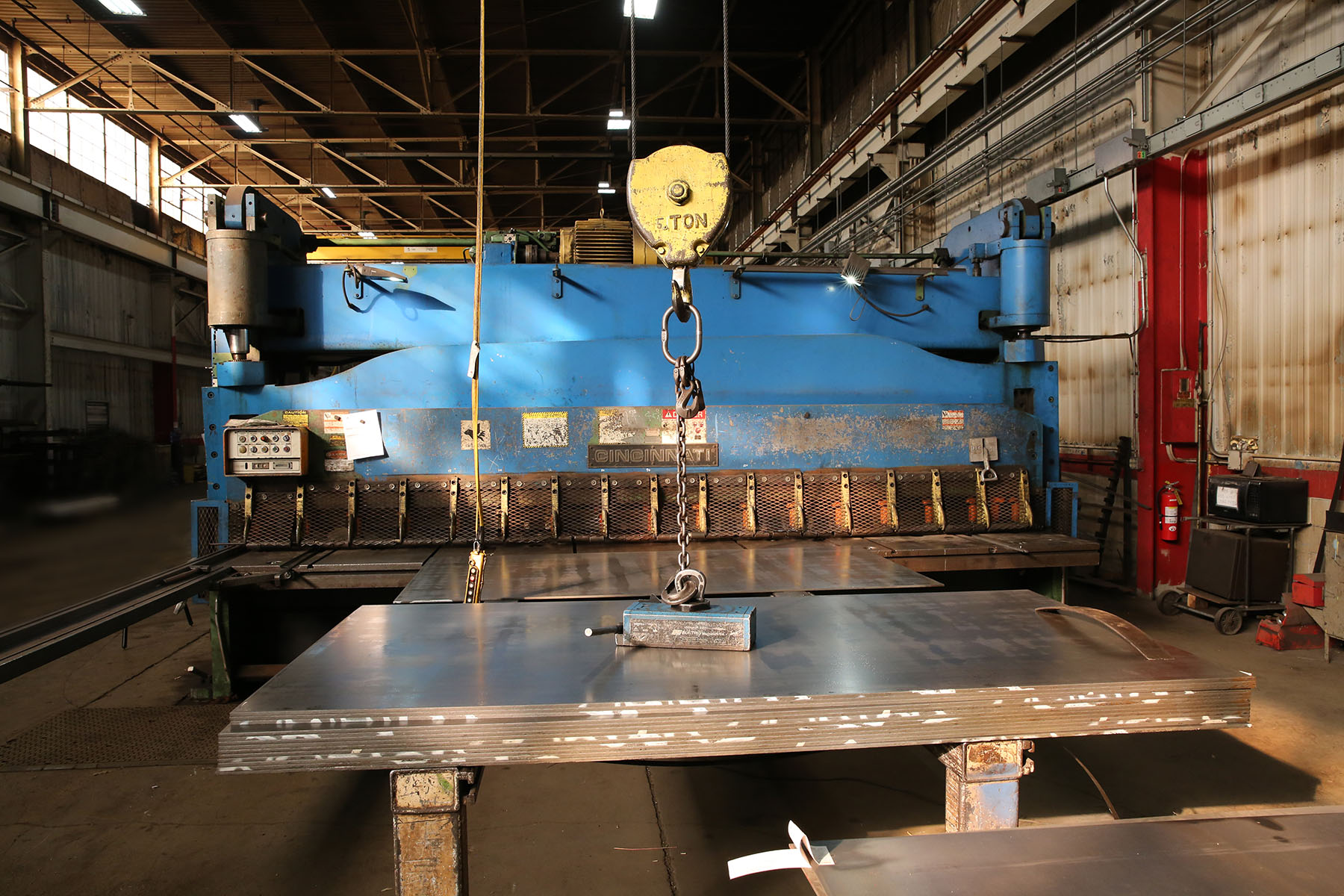
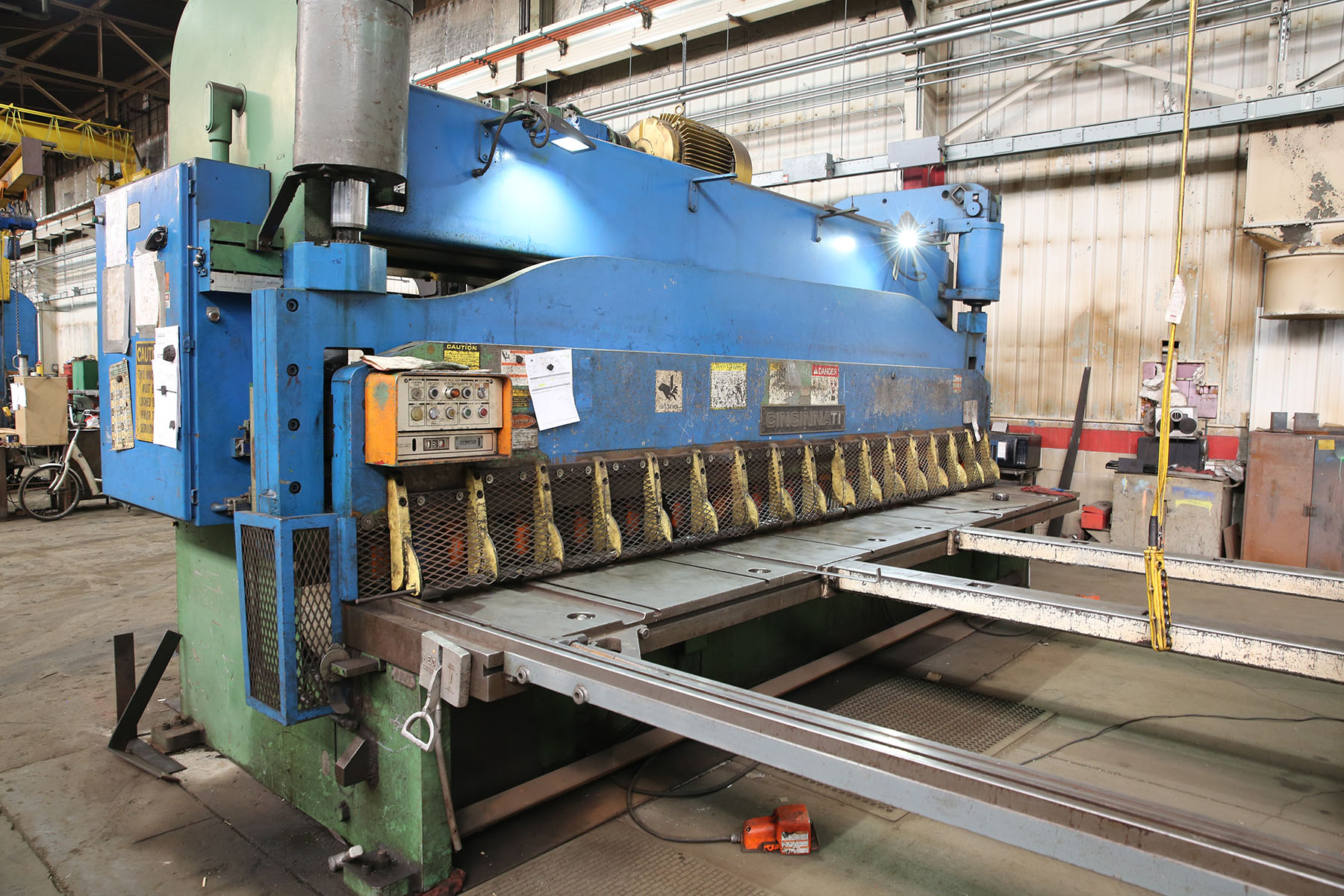
Finnco operates a Cincinnati hydraulic power squaring shear with a capacity for A36 steel up to 16 feet wide × 0.5″ thick. For jobs that need non-straight cuts, profiles, curves, and internal cutouts, plasma cutting is also available. But for straight, clean, fast blanking, shearing is the most cost-effective method in metalworking. No heat-affected zone. No kerf loss. No hardened edges. Just a clean shear that’s ready for the next operation.
Shearing Equipment
Cincinnati Hydraulic Power Squaring Shear
- Maximum width: 16 feet
- Maximum thickness: 0.5″ A36
- Squaring arm for dimensional accuracy
- Hydraulic hold-downs for edge control
Capacity by Material Grade: The 16′ × 0.5″ rating is for A36 carbon steel. Higher-strength materials (Grade 50, stainless, AR plate) reduce the maximum thickness because the material resists the shear force more aggressively. Contact with specific material and thickness for confirmation.
Why Shearing
Speed: A plate shear cuts a 16-foot straight line in seconds. Plasma or laser cutting the same line takes minutes and costs more.
Edge Quality: Sheared edges have no heat-affected zone (HAZ). The material properties at the edge are identical to the rest of the plate. This matters when the sheared edge will be welded; no hardened zone to grind off, no risk of hydrogen cracking from thermally altered microstructure.
Cost: For straight cuts (blanking, cutting to length, edge trimming), shearing is the lowest-cost cutting method available. No consumable gases, no electrode wear, no nesting software required.
Downstream Compatibility: A sheared blank feeds directly into the press brake, the plate rolls, or the punch. The edge is clean, straight, and dimensionally consistent; exactly what the next machine needs.
The Shearing-to-Forming Workflow
Shearing is rarely the final operation. At Finnco, it’s the starting point for a sequence:
- Shear – Cut plate to blank dimensions
- Punch – Add bolt holes, slots, or connection patterns
- Form – Bend on the press brake or roll on the plate rolls
- Weld – Close seams, attach components
Having shearing in-house means blanks don’t arrive from an outside service with dimensional inconsistencies that propagate through every subsequent operation. The plate that gets sheared on Monday gets formed on Tuesday by the same team, to the same tolerances.