
The Heavy Plate Rolling Specialist With Seven Dedicated Machines
Most rolling shops own one or two plate rolls and work within those limits. Finnco operates seven purpose-matched units to cover everything from light-gauge shells to 3-inch heavy-plate cylinders. That range matters because the job dictates the machine, not the other way around.
A 14-gauge stainless shell doesn’t belong on a heavy roll any more than 3-inch A36 belongs on a light one. Matching the machine to the job is how tolerances are held, surfaces stay clean, and parts come off round instead of egg-shaped. It’s the kind of decision that gets made a hundred times a week on Finnco’s floor, and it’s the reason customers who’ve tried other shops don’t go back.
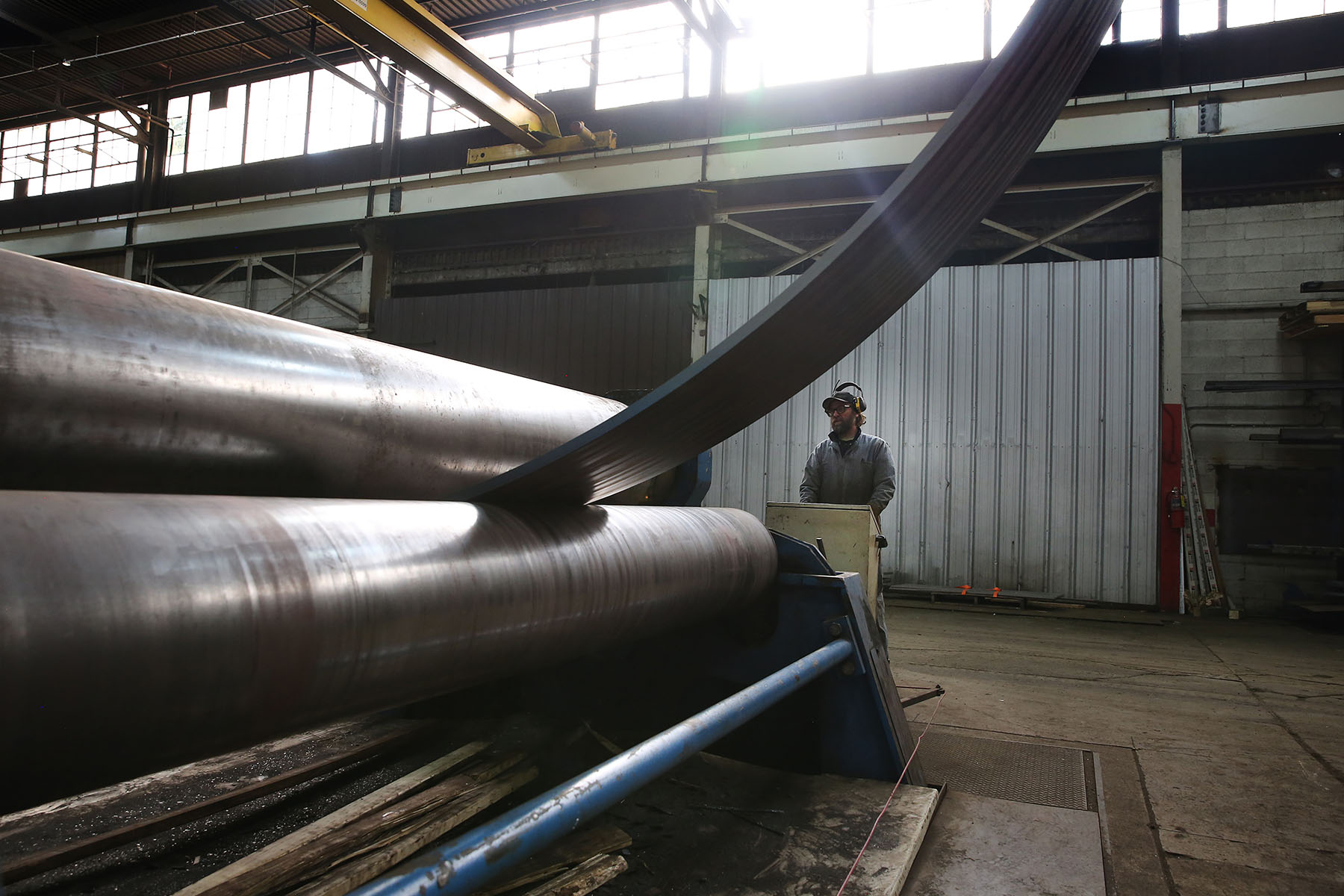
Plate Rolling Equipment & Capacity
Seven machines covering seven different capacity bands:
| Kitts Plate Roll | 10’ Davi x 11” Plate Roll |
|---|---|
| Machine dimensions: 5” roll diameter X 5’ wide X .25” thick | Machine dimensions: 11” roll diameter X 10’ wide X .75” thick |
| A36 examples: Up to 10ga X up to 5’ wide X down to 12” ID Up to .1875” X up to 30” wide X down to 30” Up to .25” X up to 3” wide X down to 36” ID | A36 examples: Up to .125” X up to 10’ wide X down to 13” IDUp to .5” X up to 72” wide X down to 55” IDUp to .625” X up to 72” wide X down to 111” ID Up to .75” X up to 48” wide X down to 111” ID |
| Niagara Plate Roll | 10’ Davi x 21” Plate Roll |
|---|---|
| Machine dimensions: 6” roll diameter X 6’ wide X .5” thick | Machine dimensions: 21” roll diameter X 10’ wide X 3” thick |
| A36 examples: Up to .5” X up to 4” wide X down to 30” ID Up to .375” X up to 7” wide X down to 36” ID Up to .25” X up to 30” wide X down to 24” ID Up to .1875” X up to 72” X down to 9” ID | A36 examples: Up to 3” X up to 15” wide X down to 30” ID Up to 1” X up to 120” wide X down to 26” ID |
| 9’ Davi Plate Roll | 12’ Berch Plate Roll |
|---|---|
| Machine dimensions: 9” roll diameter X 6’ wide X 1” thick | Machine dimensions: 14.5” roll diameter X 12’ wide X 1” thick |
| A36 examples: Up to 1” X up to 12” wide X down to 30” IDUp to 1” X up to 20” wide X down to 96” IDUp to .5” X up to 72” wide X down to 27” ID Up to .375” X up to 72” wide X down to 12” ID | A36 examples: Up to 1” X up to 12.25” wide X down to 20” ID Up to .375” X up to 144” wide X down to 18” ID |
| 6’ Berch Plate Roll |
|---|
| Machine dimensions: 14” roll diameter X 6’ wide X 2.5” thick |
| A36 examplesUp to 2.5” X up to 13.125” wide X down to 33” ID Up to 1.375” X up to 72” wide X down to 18” ID |
Steel Plate Materials
Metal doesn’t all behave the same under the rolls. What makes a rolling shop effective isn’t just the machines; it’s knowing how each material responds.
A36 Carbon Steel: The workhorse. Predictable, moderate spring-back, excellent for structural applications. The most forgiving material to roll and the most commonly requested.
Grade 50 (A572): Higher yield strength than A36, which means more spring-back and more required force. A machine rated for 2″ of A36 may only handle 1.5″ of Grade 50 at the same width. Finnco’s heavy Davi rolls are built for this.
AR400 / AR500 (Abrasion Resistant): The most demanding plate to roll. Extremely high yield strength means these plates fight to return to flat. Prone to cracking if rolled to too tight a radius or if the material is cold. Requires high-tonnage machines, experienced operators, and respect for the material’s limits.
Stainless Steel (304/316): Work-hardens during rolling. Too many passes or too slow a process makes the material progressively harder and more brittle. Surface protection is critical — polyamide roll coverings prevent carbon contamination that would compromise corrosion resistance.
T-1 (A514): High-yield, quenched and tempered. Requires immense rolling pressure and precision to avoid fracturing the internal grain structure. This is specialist territory.
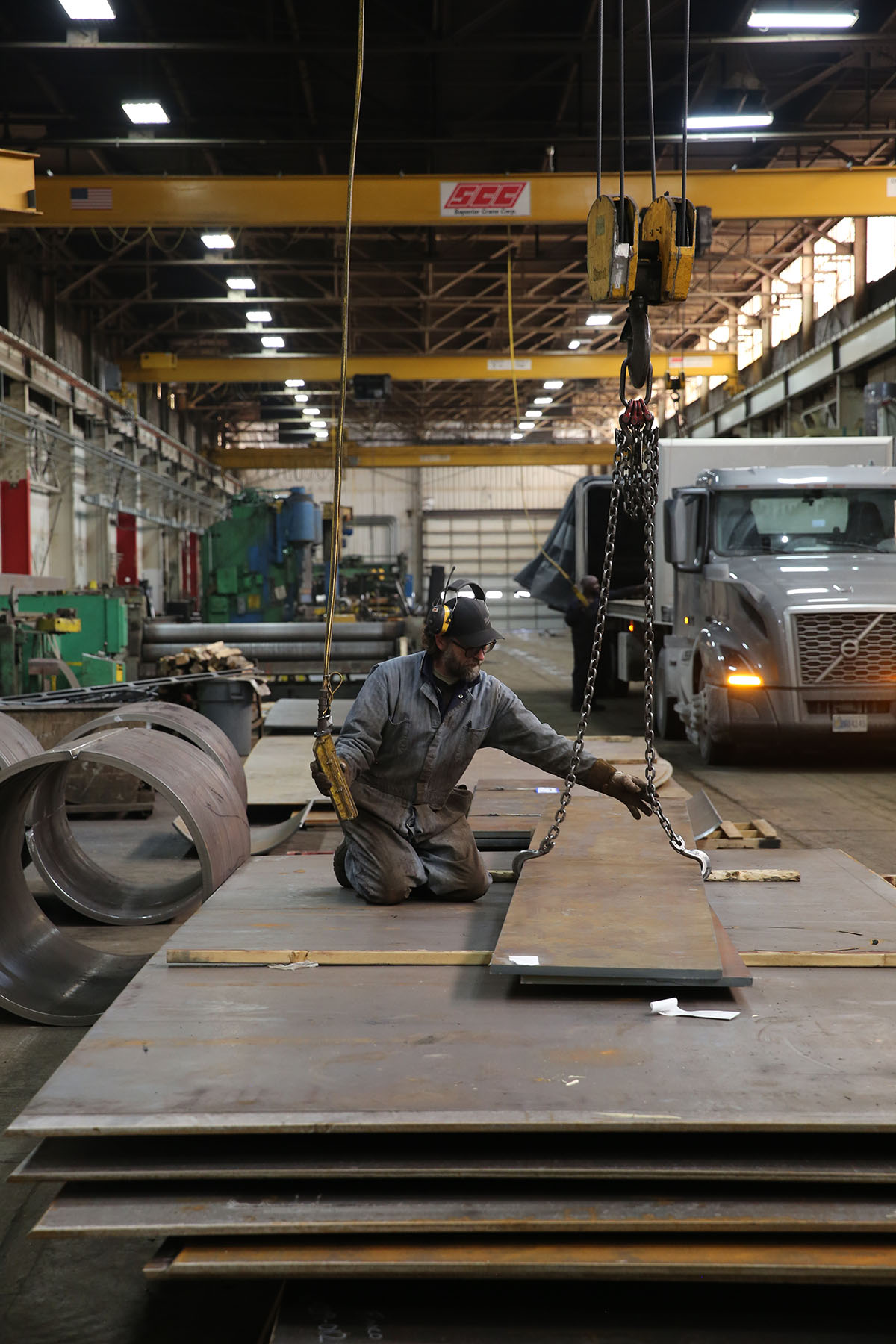
What Gets Rolled
Full Cylinders: The most common request. Rolled from flat plate, tacked or seam-welded to close. Diameters from as small as 18″ ID to large structural columns and tank shells.
Cones: Progressive radii rolling where the small end is a different diameter from the large end. Requires tilting the rolls and carefully controlling the plate’s path to prevent it from “walking” off the machine. This is where experience separates shops.
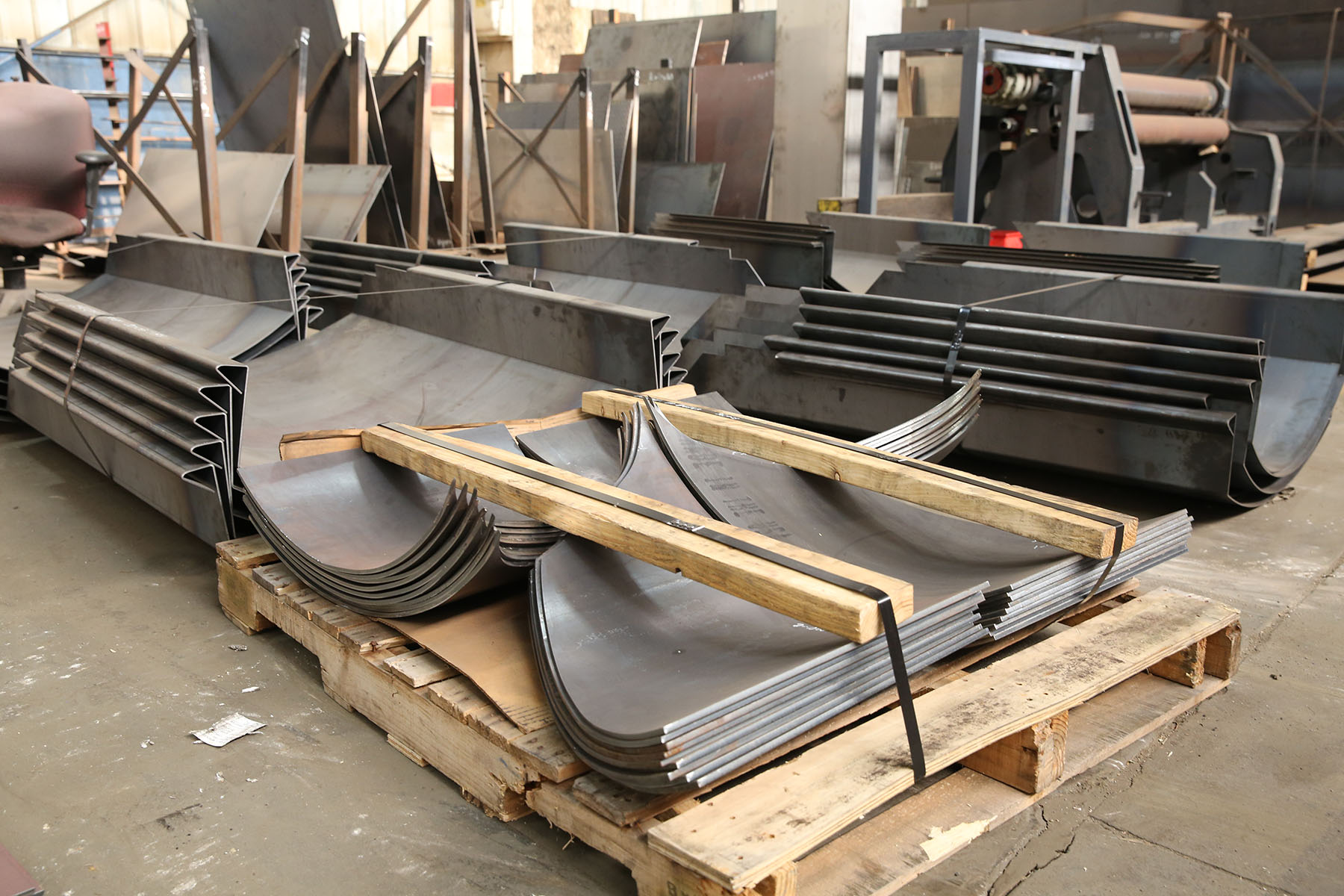
Segments & Partial Cylinders: Curved sections that don’t close into a full circle. Common in ductwork, hoppers, and structural supports.
Compound Curves & Multi-Operation Parts: Some parts can’t be rolled in a single setup. They’re pre-formed on the press brake, then rolled to final shape, then welded complete. Finnco handles the entire sequence under one roof, no shipping between vendors, no finger-pointing, no tolerance stack-up.
The Flat Spot Problem
Every rolled cylinder has a potential weakness: the “flat spot” at the leading and trailing edges where the rolls couldn’t reach. This is the single most common quality complaint in plate rolling, and it’s the area where shops most clearly separate themselves.
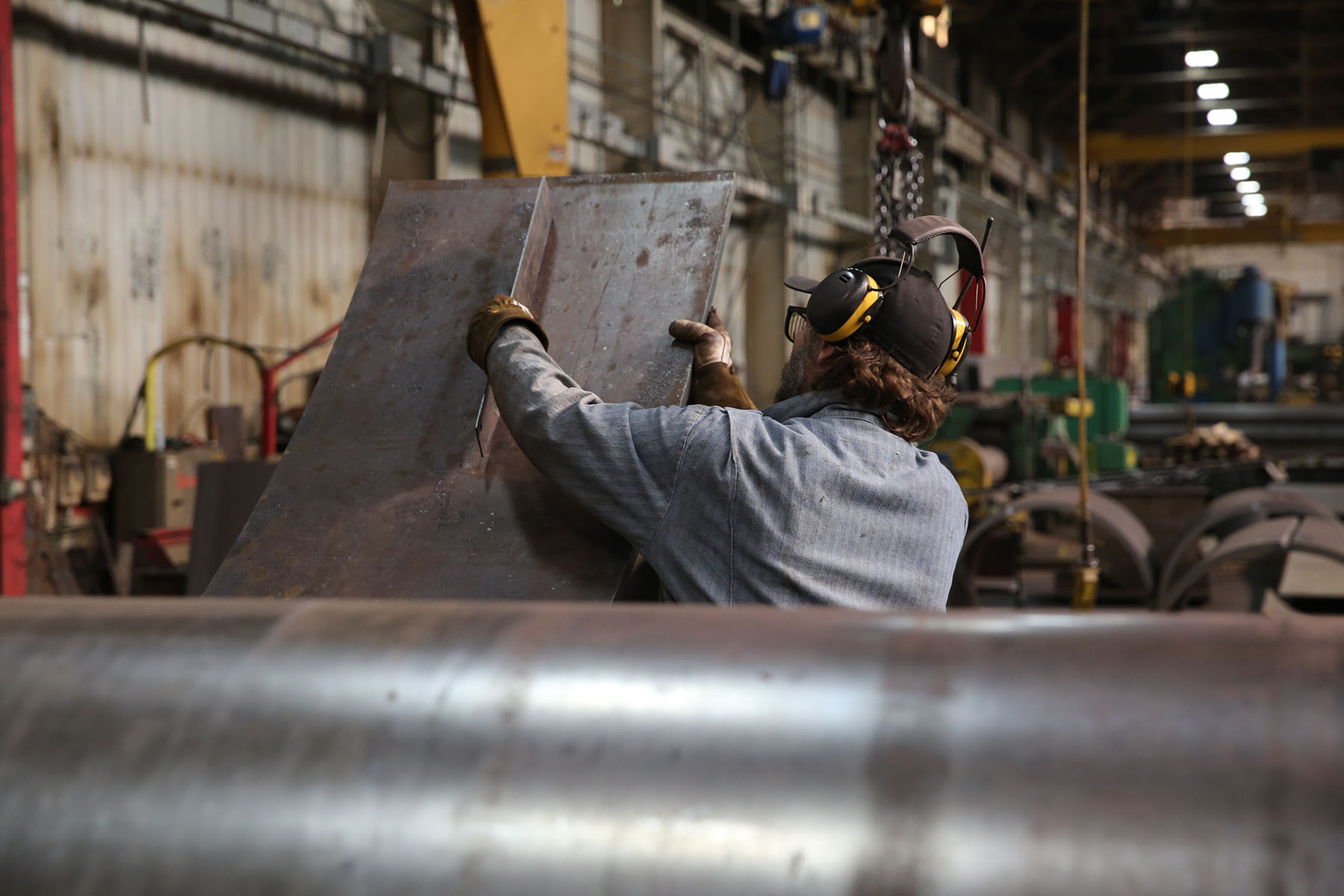
Finnco addresses the flat spot through a combination of techniques: pre-pinching the edges on the roll itself, press brake pre-forming for heavy plate or tight radii, and operator skill developed over thousands of jobs. The result is a cylinder that’s round from seam to seam, not just in the middle where it’s easy.
Industries & Applications
Pressure Vessels & Tanks
ASME-code shells, air receivers, storage tanks
Mining & Aggregates
Chutes, drum components, heavy liners (AR400/500)
Construction
Structural columns, heavy ductwork, hopper transitions
Agricultural Equipment
Auger housings, hopper components, grain handling
Energy
Wind tower sections, oil/gas storage, pipe casing
Military & Defense
Armored components, structural shells
HVAC & Industrial
Large-diameter ductwork, stacks, collector systems